
Can We Make Interiors Fun Again?
Or have we gone soft?
Hear me out.
Somewhere along the way, we decided our homes needed to behave. We stopped taking chances, stopped mixing things that weren't “supposed” to go together, and started designing spaces that were... nice. Perfectly pleasant. Perfectly coordinated. But also…perfectly forgettable.
I think social media and AI deserve a little of the blame (not knocking either - I’m guilty of doom scrolling the night away myself, plus, what design site doesn’t use some form of AI these days? Read my thoughts on that here). We're constantly shown beautifully styled rooms that have been photographed, edited, and perfected until they look effortless. After enough scrolling, it's easy to start believing that's what our homes are supposed to look like every day. Scroll through Pinterest long enough and you'll start to notice it. The same boucle chair. The same beige sofa. The same three coffee table books stacked next to a decorative bead garland that's never had to share table space with a remote control (why are there so many???)
There's nothing inherently wrong with any of those things. I love a beautiful neutral room as much as the next designer. (read my caveat here) But somewhere between "timeless" and "playing it safe," we've lost a little of what makes a home memorable.
The rooms that stay with us aren't usually the ones where every finish matched perfectly. They're the ones that felt like someone actually lived there - someone who wasn't afraid to hang the oversized artwork, mix an antique with something modern, or choose the wallpaper that made everyone else raise an eyebrow.
Those rooms don't feel staged.
They feel collected.
And I think that's the difference.
I have a simple way of thinking about design, and it comes down to three words:
Layer. Edit. Live.
Not because every room needs more things. Quite the opposite, actually. Great interiors aren't built by filling every empty corner with accessories until the room starts looking like a home décor store had a clearance sale. (although who doesn’t love a good spin through Home Goods on a rainy Saturday?)
They're built by making thoughtful choices, one layer at a time.
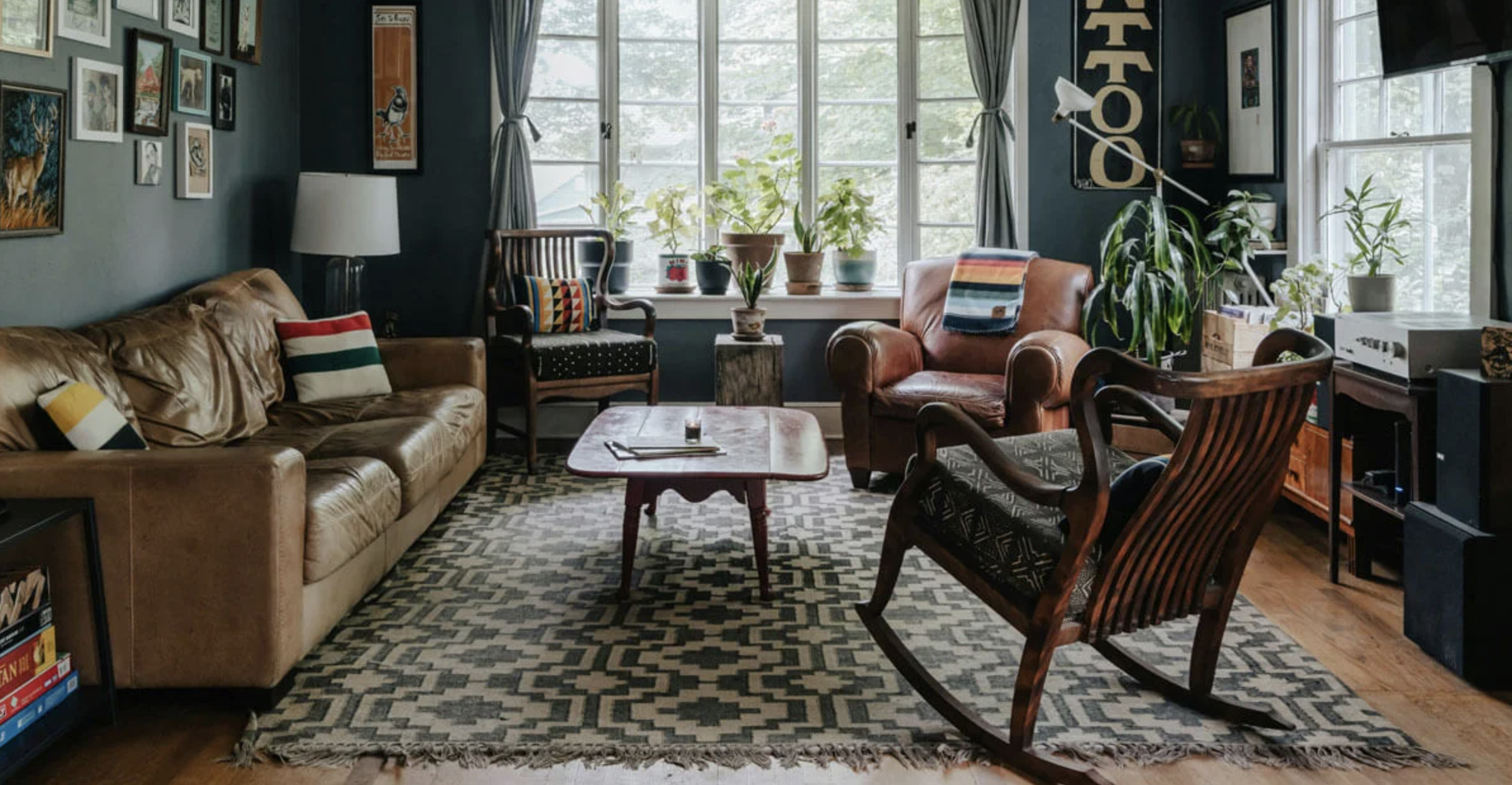
Image: Lanna Passa
Layer.
Layering is probably the most misunderstood part of design because people often assume it means adding more. More pillows. More accessories. More decorative objects that need dusting. (hard pass)
It isn't about quantity. It's about variety.
A room starts to feel collected when different materials, finishes, and patterns begin talking to each other. Think of them as unlikely besties. Like, my real life BFF is 80% my polar opposite. But, somehow, we inexplicably work together and it’s impossible to imagine not being BFFs. We’re different. An unexpected pair, that layers together perfectly. (Shout out to Megan)
So maybe that means there’s a striped chair sitting beside a linen sofa, or a handmade tile backsplash paired with warm walnut cabinetry. It might be a vintage rug underneath a modern dining table, or aged brass next to natural stone. None of those choices are particularly loud on their own, but together they create something that feels rich and lived in.
The same goes for color. I'm not suggesting every kitchen suddenly needs emerald green cabinets or that you should order a chartreuse velvet sofa just because it's different. (Although... if that's your thing, I support your journey. Chartreuse is a very underrated color) I'm simply suggesting we stop acting like every room needs to apologize for having a little personality, like it’s softly whispering, “My bad…”. Sometimes color is as subtle as a dusty blue lamp, a moss green cabinet, rust-colored pottery, or a piece of artwork that quietly pulls everything together.
The goal isn't to make the room louder.
It's to make it more interesting.
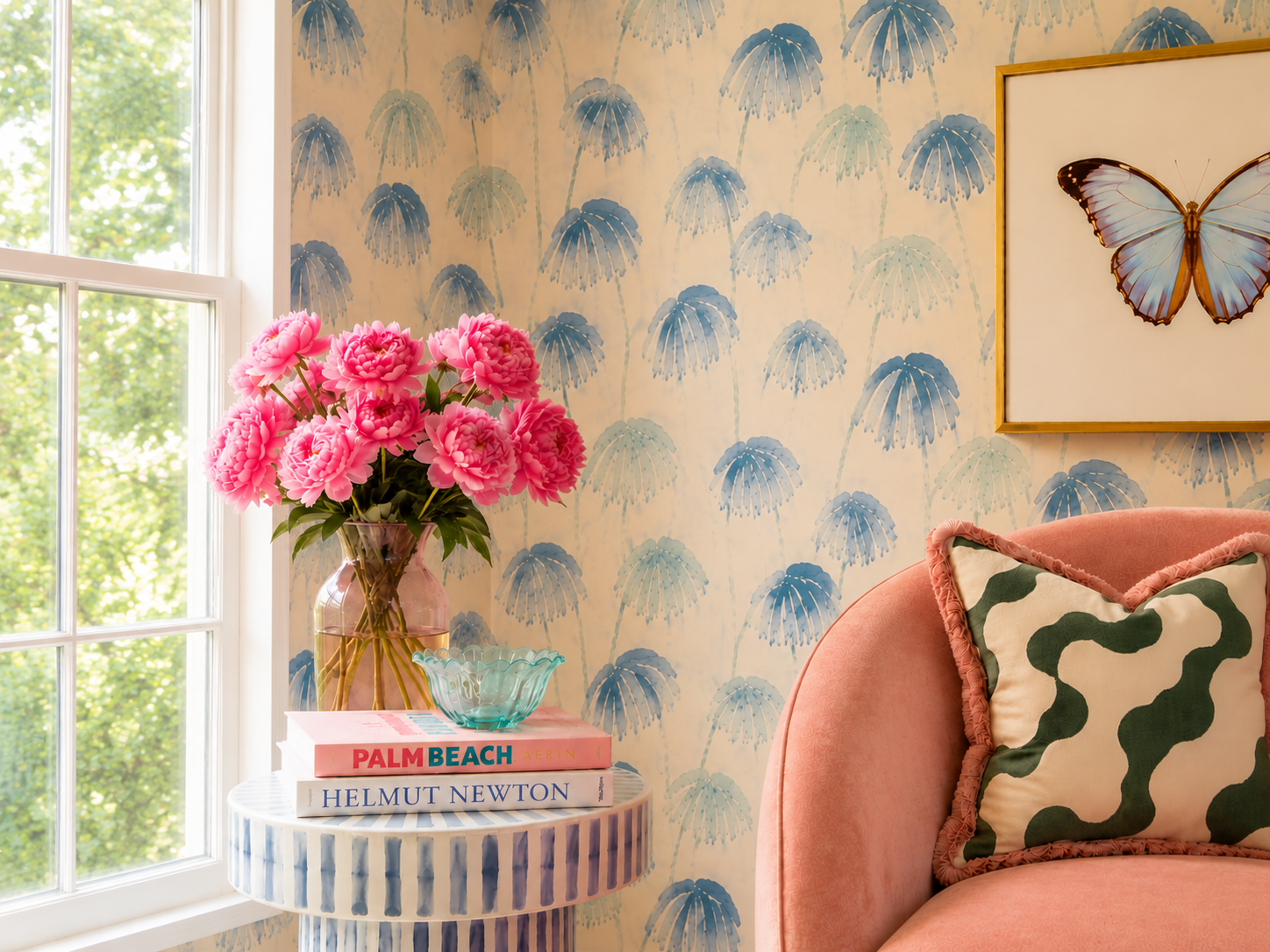
Image: Oliver Tile + Home
Edit.
Here's the part that rarely gets talked about.
Once you've layered a room, it's time to edit it.
This is where designers spend far more time than people realize. We add something, step back, remove something else, swap two pieces around, and then wonder why we didn't do it that way in the first place. It’s an endless cycle that we’ve all just surrendered ourselves to.
There's a quote often attributed to Coco Chanel: "Before you leave the house, look in the mirror and take one thing off." Who cares if it was actually Coco who said it - the advice is timeless, and it works just as well for interiors.
Sometimes a room doesn't need another decorative object.
It needs one less.
Maybe the extra vase is competing with the beautiful lamp. Maybe the shelves don't need twelve carefully arranged accessories when three meaningful pieces would tell a stronger story. Maybe every surface doesn't need something sitting on it just because it fits.
Editing creates breathing room, gives your eyes a place to land. It gives your favorite pieces permission to be noticed instead of asking them to compete with everything around them.
Good design isn't about filling every corner.
It's about knowing when to stop.
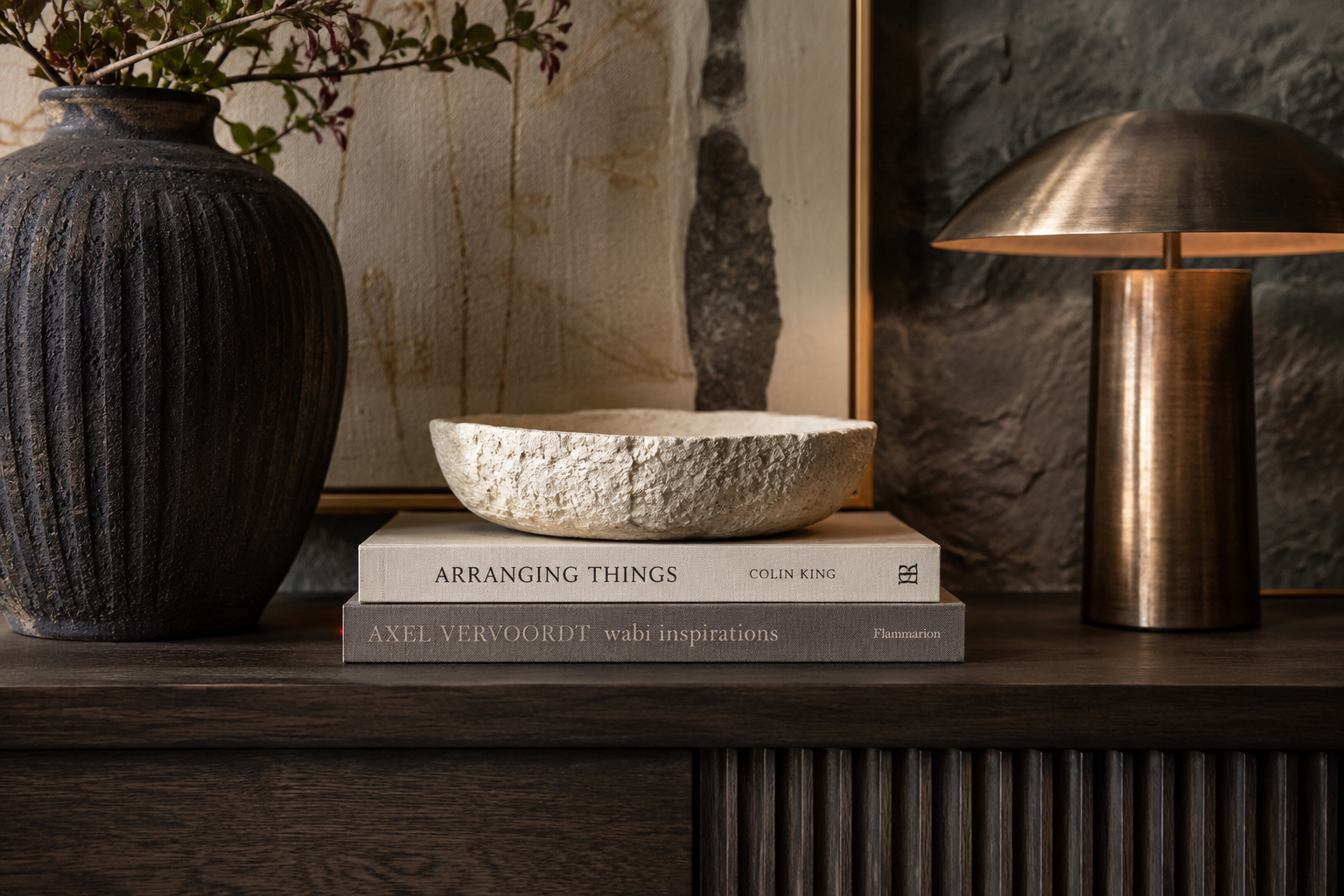
Fluted wood. Textured stone. Dramatic marble. Reflective copper.
Image: Oliver Tile + Home
Live.
This is my favorite part because it's the only part you can't rush.
Once you've layered your room and edited it thoughtfully, stop trying to finish it.
Live in it.
Bring home flowers because they were on sale. Hang the artwork you found on vacation. Pick up the funny little ceramic bowl from the local maker's market even though you have absolutely no practical use for it. Let your kids' fingerprints occasionally end up on the coffee table. Let your dog claim the sunny spot by the window.
Homes become interesting the same way people do - with a little time and a good collection of stories.
That's why the best interiors don't look copied.
They look lived in.
