
The Most Important Label You'll Never Read
You found the tile. You ordered the tile. Your installer starts laying the tile….and suddenly one section looks just a little different than the rest.
Cue the panic. (or the frantic Google search that landed you here.)
Before anyone starts blaming the installer, the supplier, or Mercury being in retrograde (I'm not saying it isn't... just probably not for this), let's talk about one of the least glamorous - but most important - parts of any tile (or fabric, wallpaper, hardwood...you get the idea) project:
Dye lots.
So...what exactly is a dye lot?
A dye lot (sometimes called a batch, shade lot, or production run) is a group of material manufactured at the same time.
Manufacturers use the same formulas, but raw materials vary. Kilns fire differently. Glazes react differently. Even humidity gets involved because apparently it likes to be included.
Translation: manufacturing is science... but it's also a little bit magic.
We're usually talking about subtle differences. But put two different dye lots next to each other? Suddenly your brain goes….”Hang on….”
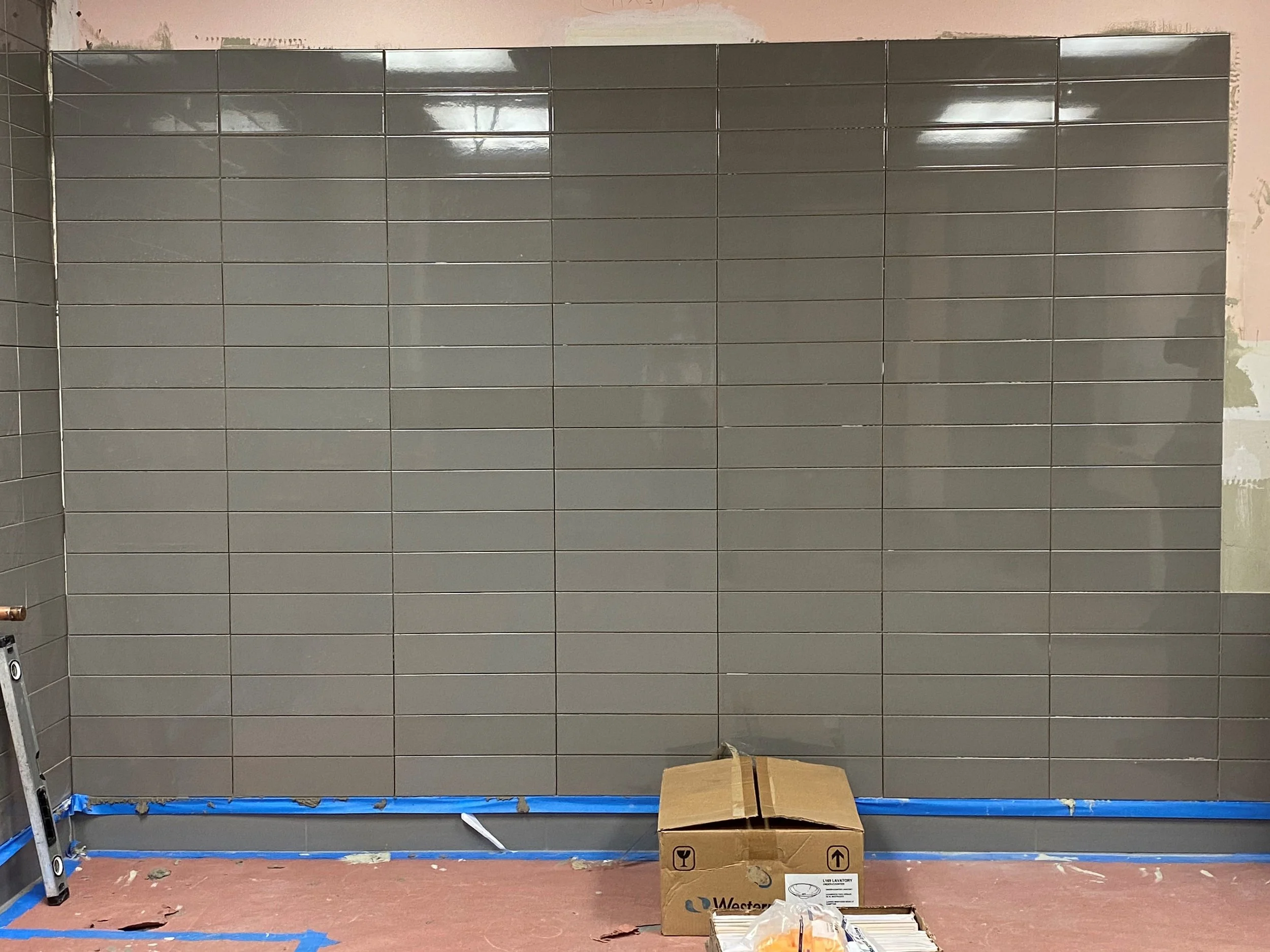
Spot the difference.
A real-life example...
A good friend of mine remodeled her home a few years ago. One day she called me with a question. "Is it normal for my penny round bathroom floor to look splotchy?" One photo later and I was doing the facepalm emoji. It wasn't weird. It was two different dye lots. A couple of mosaic sheets stood out like sore thumbs right in the middle of the floor. Her installer had told her, "Don't worry. It'll look fine once it's grouted." Spoiler alert: it did not.
After giving her a healthy amount of grief for a) buying at a box store, and b) not calling the tile nerd she literally has on speed dial, I had to deliver the bad news. Those sheets should have been caught before installation, and once they were set, there was no miracle cure. The floor had to come out and be redone. Or, put a big rug over it. Her response? "Kelley...I am not having that conversation. This guy has a teardrop tattoo under his eye. And it was filled in." IYKYK. Thankfully, one installer later, she had a beautiful new floor and all was right with the world - but it wasn't a cheap mistake. It was also one that could have been avoided with a simple inspection before the first sheet was ever installed. Homeowners have a role in that checks-and-balances process too, but here's the thing: if nobody has ever told you dye lots are something to look for, why would you know to check? That's exactly why it's so important to work with professionals who know what they're looking at...and why I spend so much time trying to teach homeowners what to watch for as well.
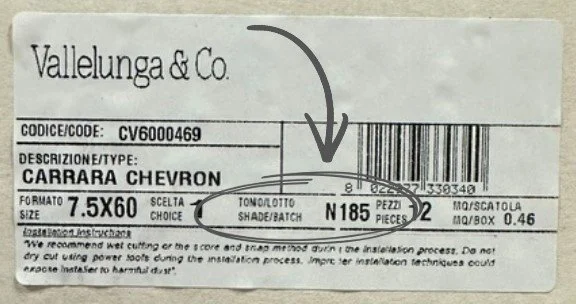
It's not just a tile thing.
Dye lots matter for all kinds of materials, including:
Tile
Fabric
Carpet
Wallpaper
Paint
Hardwood flooring
Luxury vinyl flooring
Basically, if it has color, somebody somewhere had to make that color... and nature occasionally likes to keep them humble.
So how do you avoid problems?
The easiest answer?
Order all of your material at the same time.
If you discover halfway through the project that you need another box, there's a chance the original dye lot has already sold through.
Which is a polite way of saying, "Good luck finding that exact one again."
One important note, though:
Don't panic if your trim pieces have a different dye lot than your field tile.
Field tiles and trims are often manufactured separately. Unless a product is made to order, it's completely normal for those dye lot numbers to be different.
Fortunately, trim pieces are just that - trim. They're the backup singers. They make the star look good, but nobody bought tickets just to see them.
The real goal is making sure the field tile installed in one continuous area comes from the same dye lot whenever possible. That's where a mismatch is most likely to catch your eye...and once you see it, you'll never unsee it.
Next up...
Now that you know what dye lots are, let's talk about how to keep them from turning into an expensive headache.
In Part Two, I'll cover:
Why opening the boxes first is always cheaper than tearing out a shower later.
The one photo you should always take before recycling the boxes.
Why inspecting your materials before installation is non-negotiable. Periodt.
A few simple tips that can save you time, money, and a whole lot of unnecessary frustration.
Trust me...this is where things get really important.
Have you ever expected to read a cliffhanger about dye lots?
Me neither.
Yet...here we are.
